
Preparing Rural Emergency Departments for Obstetric Emergencies
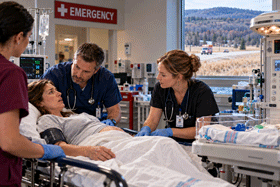 Rural hospitals continue to experience declining birth rates, resulting in the closure of dedicated labor and delivery units. As a result, access to care for expectant mothers has been impacted, increasing utilization of non-obstetric care providers to manage obstetric emergencies. Rural hospitals must assess their capacity to manage emergent obstetric conditions and develop plans to address performance gaps.
The National Rural Health Association’s policy brief, Obstetric Readiness in Rural Communities Lacking Hospital Labor and Delivery Units, highlights the growing need for rural hospitals' emergency departments to prepare for obstetric emergencies as labor and delivery units continue to close. The brief identifies significant preparedness gaps in non-obstetric settings. It emphasizes the importance of simulation training, standardized protocols, neonatal resuscitation readiness, and rapid-response planning for precipitous deliveries and maternal hemorrhage. In response to this evolving need, Medical Mutual is expanding its Safe Care: Obstetrics program to include emergency departments.
This article falls under Clinical/Patient Safety in the Enterprise Risk Management (ERM) risk domains.
Clinical/Patient Safety
Risks associated with the delivery of care to residents, patients and other healthcare customers. Clinical risks include: failure to follow evidence based practice, medication errors, hospital acquired conditions (HAC), serious safety events (SSE), and others.